Context
Modern restaurants rely on multiple independent systems, including point-of-sale terminals, reservation platforms, online ordering services, kitchen displays, and smart cooking equipment. While each system supports a specific function, they rarely operate as one connected ecosystem.
As a result, employees must manually coordinate information between departments, increasing communication effort, slowing workflows, and reducing operational efficiency.
Challenge
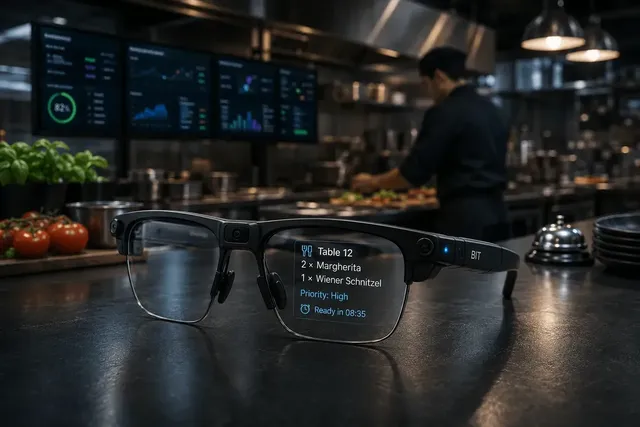
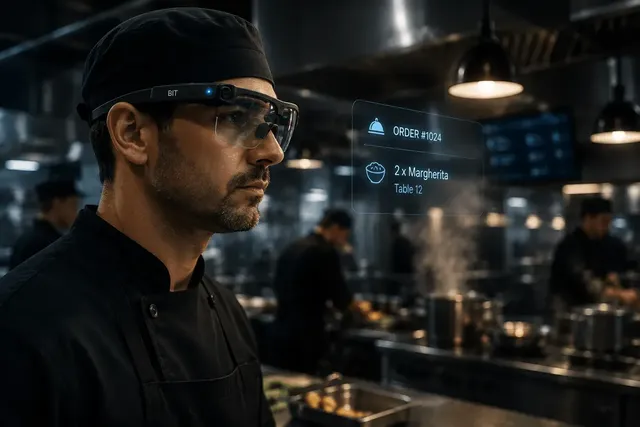
Restaurant operations require continuous coordination between service staff, bar personnel, kitchen teams, and connected equipment. Traditional kitchen display systems present the same information to every employee, creating unnecessary visual overload and making it difficult to prioritize tasks in real time.
At the same time, changes in preparation times, equipment availability, or order priorities are often communicated manually, reducing consistency and delaying service.